
Neil Stephen, Dualchas Architects
Understanding a plot before you buy it is critical. This might seem obvious, but a wonderful view and a planning consent can sometimes discourage people from asking the questions that matter.
I once went to look at a site for a client who was considering buying it. It had planning permission in principle. What was less obvious from the drawings was that the site was so steep that the proposed access was unworkable. The only practical way in was through the neighbour’s land.
The neighbour was the seller’s brother. They had fallen out, badly, several years previously. He wasn’t going to help.
Fortunately, we were able to warn our client before they bought a very expensive quarter-acre of grazing. Without that access, they couldn’t build their house.
Planning permission is not the whole story
When buying a building plot in Scotland, read the planning conditions and establish what remains unresolved. Can the proposals actually be carried out? Just because something is on a plan does not mean it is going to work.
Beyond the access itself, check visibility at the public road and whether delivery lorries and emergency vehicles can get in and turn. Any necessary rights over neighbouring land need to be secured before buying.
Drainage can scupper the whole project
If there is no public sewer, you need a workable private drainage solution. The ground needs to be investigated, the discharge route established and the relevant approvals obtained.
Sometimes a proposal involves taking treated wastewater to a burn through a neighbour’s land. But what if they will not agree, or the discharge is unacceptable? There may be another solution. There may not.
Do not assume a drainage sketch accompanying planning permission in principle has been tested or separately authorised. A tank and a dotted line are not enough. In Scotland, discharges from septic tanks and treatment plants require SEPA authorisation.
These are not particularly glamorous conversations. But they are better had before you own the land.
Services can take a large bite out of the budget
A power line beside the boundary or a water pipe down the road does not mean a connection will be straightforward or affordable.
Establish the route, likely cost and any permissions needed. If a private water supply is proposed, check its quality and reliability too.
Include these costs alongside drainage and groundworks from the beginning. Otherwise, a considerable part of the money intended for your house can disappear before you start building it.
What is under the ground?
Hard Lewisian gneiss or seven feet of peat may not make building impossible, but either could make a substantial hole in your budget. Peat can also bring environmental and planning constraints that need to be understood.
You cannot establish all this by walking over the grass. A site visit helps identify what needs investigating; appropriate surveys and engineering advice establish what you are dealing with.
Flood risk needs the same attention. Visit on a beautiful summer afternoon and it can be difficult to imagine where the water goes after several days of Highland rain.
A plot that looks cheap may turn out to be very expensive. What matters is the cost of buying the land and making it ready for the house, not simply the asking price.
There is more to a site than the view
A view might be what draws you to a place, but it is only part of what will make it a good place to live. Where does the sun come from? Where can you find shelter? Can you create somewhere to sit outside without being blown back indoors?
The most obvious position for the house is not always the best one. Moving it might reduce excavation, improve privacy or allow a much better relationship with the garden.
Good rural architecture comes from paying attention to these things. How you arrive, where you leave muddy boots, how the light moves through the rooms and what you see when you sit down are all part of the same discussion.

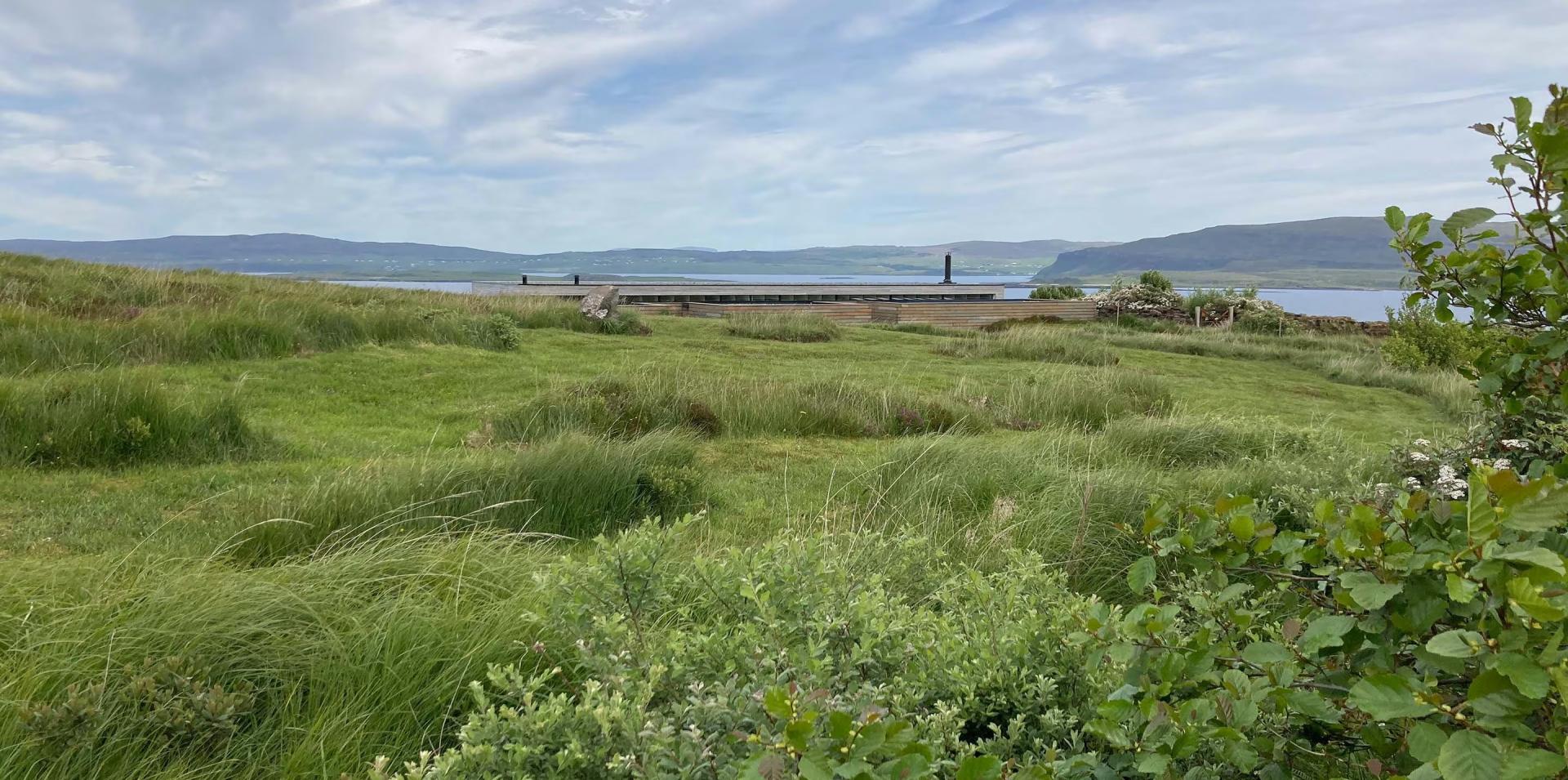
Cliff House, Isle of Skye: the approach and sheltered siting respond to the contours of the land. Project photography: Andrew Lee and Alistair Nicholls.
Get your advisers talking before you buy
Do not expect your solicitor to pick up every practical problem. Their job is to examine ownership, rights and the purchase agreement. They are not generally the person out in their wellies checking whether a fire appliance could turn at the top of the drive.
That needs an architect, with engineers and other consultants where required. The solicitor then needs their findings so that the legal arrangements reflect what is actually needed on the ground.
If the house depends on access across another property, or a drainage pipe running through the neighbouring field, those requirements need to be understood and secured.
Ask your solicitor how the purchase can be made conditional on satisfactory investigations, permissions and rights before you become committed. Give the team time to check things properly.
There will always be unknowns in a building project. But buying the land first and investigating afterwards is an unnecessarily expensive way to discover them.
Sometimes an architect’s most useful contribution is to show you what a site could become.
Sometimes it is to tell you not to buy it.
If you are considering a building plot in Scotland, get in touch with Dualchas before committing. Send us the location, planning information and an outline of what you hope to build.